
"espresso flow rate"
300 article(s) found

Coffee powder thickness to adjust a few scales Common grinding thickness map
Coffee powder thickness to adjust a few scales Common grinding thickness map Powder thickness based on the choice of crema color and the proportion of the final cup of espresso, such as the relationship between the thickness of the powder and the flow rate in the espresso extraction, the same pressure under the premise, the finer the powder, the slower the flow rate; the thicker the powder, the faster the flow rate. When the thickness of the bonding powder is constant,

Italian espresso ESPRESSO production problem checklist
There are always some problems when we use coffee machines to extract espresso, so let's see what the problems will be. And how to find the reason: one. Observe whether the flow rate of coffee from the handle of the filter is between 25 and 30 seconds Q. The possible reason for the excessive flow rate is: 2, 4, 4, 5 Q. The possible reasons for the slow flow rate are as follows: 32. Watch the coffee flow out of the filter handle (CR)
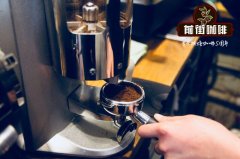
Espresso | three factors determine how to adjust the speed at which you produce espresso.
1. Powder quantity refers to the amount of dry coffee powder poured into a filter bowl. Ideally, an electronic scale with an accuracy of 0.1g is used to measure the amount of powder. The filter bowl of the handle usually has a capacity limit; if not marked, the amount of powder should not exceed the edge of the filter bowl. Once the amount of powder is determined, it should be taken as the standard to remain stable. For example, the amount of powder in my coffee machine is 20g, so every time I
Four principles to be followed by Espresso
(1) the quantity of coffee beans must be standard, generally 14-16 grams per cup, using good quality deep-roasted coffee beans. (2) the grinding powder should be of appropriate particle size, not too coarse or too fine. Coffee beans are too coarse or too fine to make thick and delicious espresso. When the coffee powder is too coarse, the gap in the filter bowl is too big, the resistance to water is not enough, and the coffee flow rate is too fast, which is easy to cause extraction.

Determination method of Italian Coffee Oil flow rate
The flow rate of Italian coffee directly determines the taste of ESPRESSO, too fast flow rate will make the essence of coffee has not been dissolved into the water, but the water has passed through the coffee powder, resulting in coffee tasteless; too slow flow rate will make the essence and dross of coffee all into the water, resulting in coffee with obvious scorching taste or exciting bitter taste. For beginners, the control of velocity

What is the reason why the flow rate of espresso is normal but not delicious?
Professional coffee knowledge exchange more coffee bean information Please pay attention to the coffee workshop (Wechat official account cafe_style) many baristas spend a lot of time every morning adjusting the bean grinder, every day after making coffee will carefully remove the residue in the coffee handle, clean up the powder in the channel of the grinder, so that every step of the production is accurate. At this time, baristas usually also
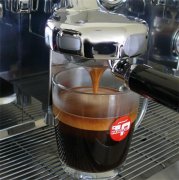
A good Espresso, become a cup of art pull flowers
The wonderful flower pattern adds infinite charm to the coffee, but do you know what factors it depends on for a successful cup of flowers? The main ingredients of a cup of flower are base coffee and milk foam. In addition to the differences in the florist's personal methods, the main factors that affect the flower are: base coffee, milk, cup and pattern. Today, let's talk about the base coffee, that is, espresso.

Espresso cloth powder-semi-automatic espresso machine operation
Italian coffee cloth powder-the force of the semi-automatic Italian coffee machine to operate the pressing powder should be determined according to the thickness of the coffee powder, and the reference basis is the flow rate of coffee during extraction (extraction time 253 seconds). If the flow rate is too fast, the powder pressing strength is too light; if the flow rate is too slow, the powder pressure is too heavy, which will directly affect the Italian concentrated product and the taste of the coffee. Besides, everyone's giving
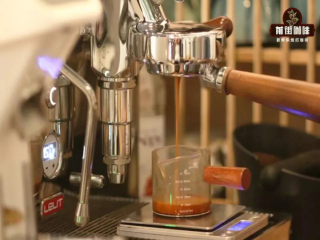
What is the extraction standard of espresso? How to adjust the grinding ratio parameters of Italian coffee
After a friend saw the espresso scheme shared in the front street, he went home and tried to extract the coffee. Finally, I didn't get the right taste, so I went to Qianjie again to discuss this problem. Therefore, Qianjie also takes this opportunity to share with you how to judge espresso in practice. First of all, any data is just
Coffee common sense the judging method of Italian coffee oil is determined by the flow rate.
The flow rate of Italian coffee directly determines the taste of ESPRESSO, too fast flow rate will make the essence of coffee has not been dissolved into the water, but the water has passed through the coffee powder, resulting in coffee tasteless; too slow flow rate will make the essence and dross of coffee all into the water, resulting in coffee with obvious scorching taste or exciting bitter taste. For beginners, the control of velocity
Making problem checklist by ESPRESSO
There are always some problems when we use coffee machines to extract espresso, so let's see what the problems will be. And how to find the reason: one. Observe whether the flow rate of coffee from the handle of the filter is between 25 and 30 seconds Q. The possible reason for the excessive flow rate is: 2, 4, 4, 5 Q. The possible reasons for the slow flow rate are as follows: 32. Watch the coffee flow out of the filter handle (CR)

Italian latte cappuccino mocha-the standard espresso cup has a capacity of multiple milliliters
Italian latte cappuccino mocha-the standard espresso cup has a multi-milliliter capacity in the face of a dazzling variety of cups on the market, we often don't know how to start. What's the difference between coffee cups and other cups? Which cup should I use to drink what kind of coffee? When buying cups, most people are often unable to correctly distinguish the difference between coffee cups and black tea cups. Usually the red teacup is used for
ESPRESSO problem Checklist of Fine Coffee
one。 Observe whether the flow rate of coffee from the handle of the filter is between 25-30 seconds. If the flow rate is too fast, it may be the reason why the flow rate is too slow. two。 Observe the shape of the CREMA that flows out of the handle of the filter to see if the Q.CREMA has too much water in a thick and smooth flow, not a smooth flow, but a possible cause of splashing off the handle. three。 Observe whether the color of CREMA is

General knowledge of making Italian Coffee with ESPRESSO Checklist
ESPRESSO problem check list 1. Observe whether the flow rate of coffee from the handle of the filter is between 25 and 30 seconds Q. The possible reason for the excessive flow rate is: 2, 4, 4, 5 Q. The possible reasons for the slow flow rate are as follows: 32. Observe the shape of the CREMA of coffee flowing out of the handle of the filter, whether it is a thick and smooth flow of Q.CREMA with too much water content, not a smooth flow, but a spatter from the handle.

Coffee basic knowledge ESPRESSO problem Checklist
one。 Observe whether the flow rate of coffee from the handle of the filter is between 25-30 seconds. If the flow rate is too fast, it may be the reason why the flow rate is too slow. two。 Observe the shape of the CREMA that flows out of the handle of the filter to see if the Q.CREMA has too much water in a thick and smooth flow, not a smooth flow, but a possible cause of splashing off the handle. three。 Observe whether the color of CREMA is

Coffee common sense four principles to be followed in making a cup of Espresso
(1) the quantity of coffee beans must be standard, generally 14-16 grams per cup, using good quality deep-roasted coffee beans. (2) the grinding powder should be of appropriate particle size, not too coarse or too fine. Coffee beans are too coarse or too fine to make thick and delicious espresso. When the coffee powder is too coarse, the gap in the filter bowl is too big, the resistance to water is not enough, and the coffee flow rate is too fast, which is easy to cause extraction.

ESPRESSO problem Checklist-as a good barista must know
Summary: ESPRESSO problem checklist 1. Observe whether the flow rate of coffee from the handle of the filter is between 25 and 30 seconds Q. The possible reason for the excessive flow rate is: 2, 4, 4, 5 Q. The possible reasons for the slow flow rate are as follows: 32. Observe the shape of the CREMA of the coffee flowing out of the handle of the filter, whether it is a thick and smooth flow of Q.CREMA with too much water content, not a smooth flow, but a splash out of the handle.
Basic knowledge of coffee four principles to be followed in making a cup of Espresso
(1) the quantity of coffee beans must be standard, generally 14-16 grams per cup, using good quality deep-roasted coffee beans. (2) the grinding powder should be of appropriate particle size, not too coarse or too fine. Coffee beans are too coarse or too fine to make thick and delicious espresso. When the coffee powder is too coarse, the gap in the filter bowl is too big, the resistance to water is not enough, and the coffee flow rate is too fast, which is easy to cause extraction.

Factors affecting the quality of Espresso and three factors affecting the extraction time of concentration
Factors affecting the quality of Espresso it is impossible to make a good Espresso without a good mix of coffee beans. Mixed beans must be matched with the sweetness, aroma and lubrication required by Espresso. Deeply roasted beans will taste bitter and scorched, and excessive deep roasting will even make the coffee lose most of its flavor, while experienced bakers will use medium and deep roasting to maintain the aroma of Espresso.

4 principles to follow when making a cup of Espresso
(1)The amount of coffee beans must be standard, generally 14-16 g/cup, using high-quality deep-roasted coffee beans. (2)The grinding powder shall be selected with appropriate particle size, not too coarse or too fine. Coffee beans are ground too coarse or too fine to make thick and delicious espresso coffee. When the coffee powder is ground too coarse, the coffee gap in the filter bowl is too large, the resistance to water is not enough, and the coffee flow is too fast, which is easy to cause extraction.